In this page the cloud chambers which left the garage or are currently under construction.
Machine n°0 : the Prototype
This machine was built in April 2020 from raw materials during the lockdown. Until now, it’s my live experiment to test new glass chambers (method of evaporation, collection of alcohol, symmetry of electric fields, alcohol proofness…). I never modified the « core », the system which produce the cold needed. It need a serious design upgrade but I like it as is because this thing remains reliable after years despite all the brutality it subice !
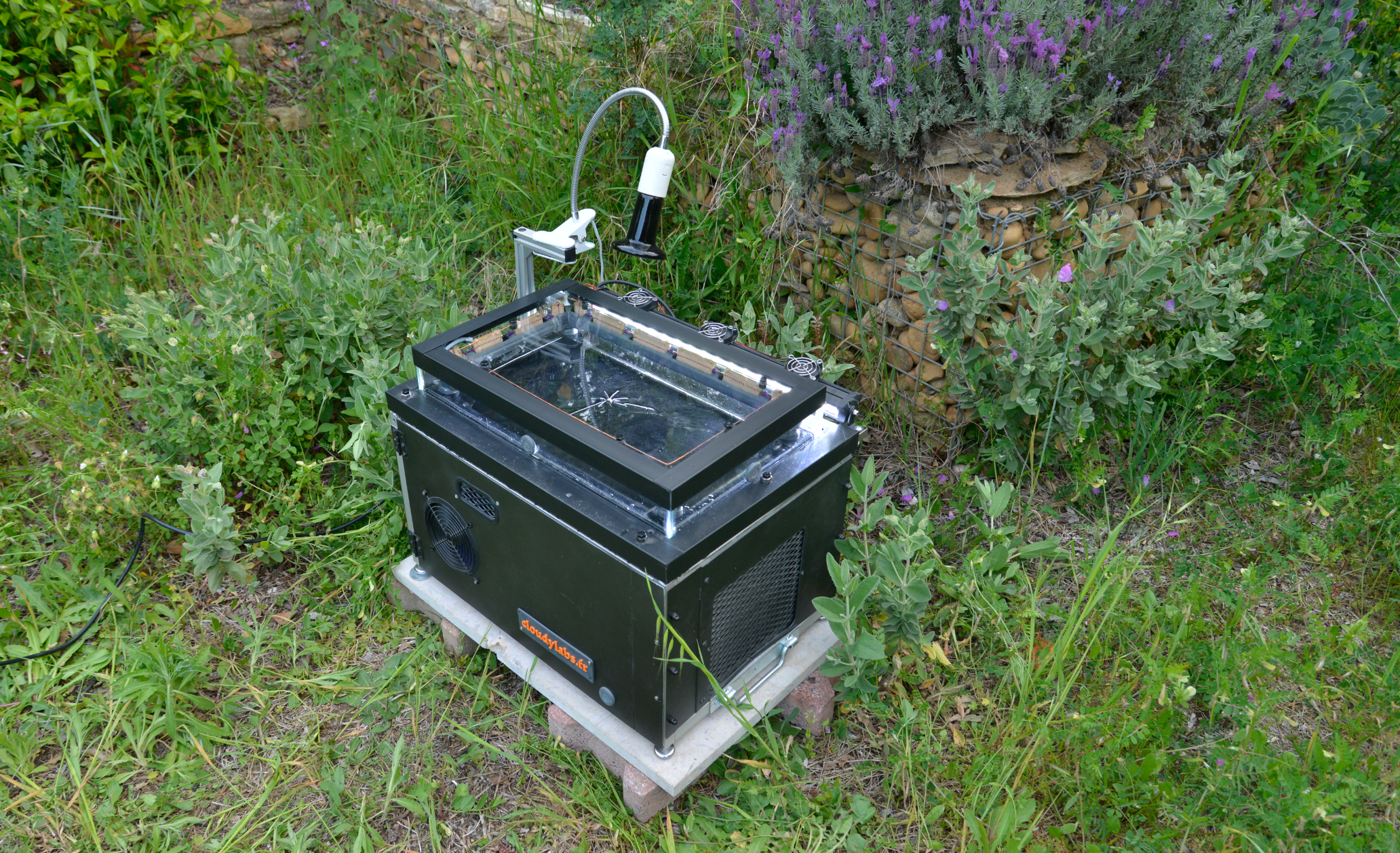
This is this 4 th anniversary of running :
(still running fine in 09/2026).
Machine n°1 : IP2I 2022
The cloud chamber of september 2022 was sold to an University in Lyon (CNRS, IP2I).
The feedback obtained is that the lock is malfunctioning and the power plug of the IR lamp could be more sturdy. I then modified the machine a year later to improve this.
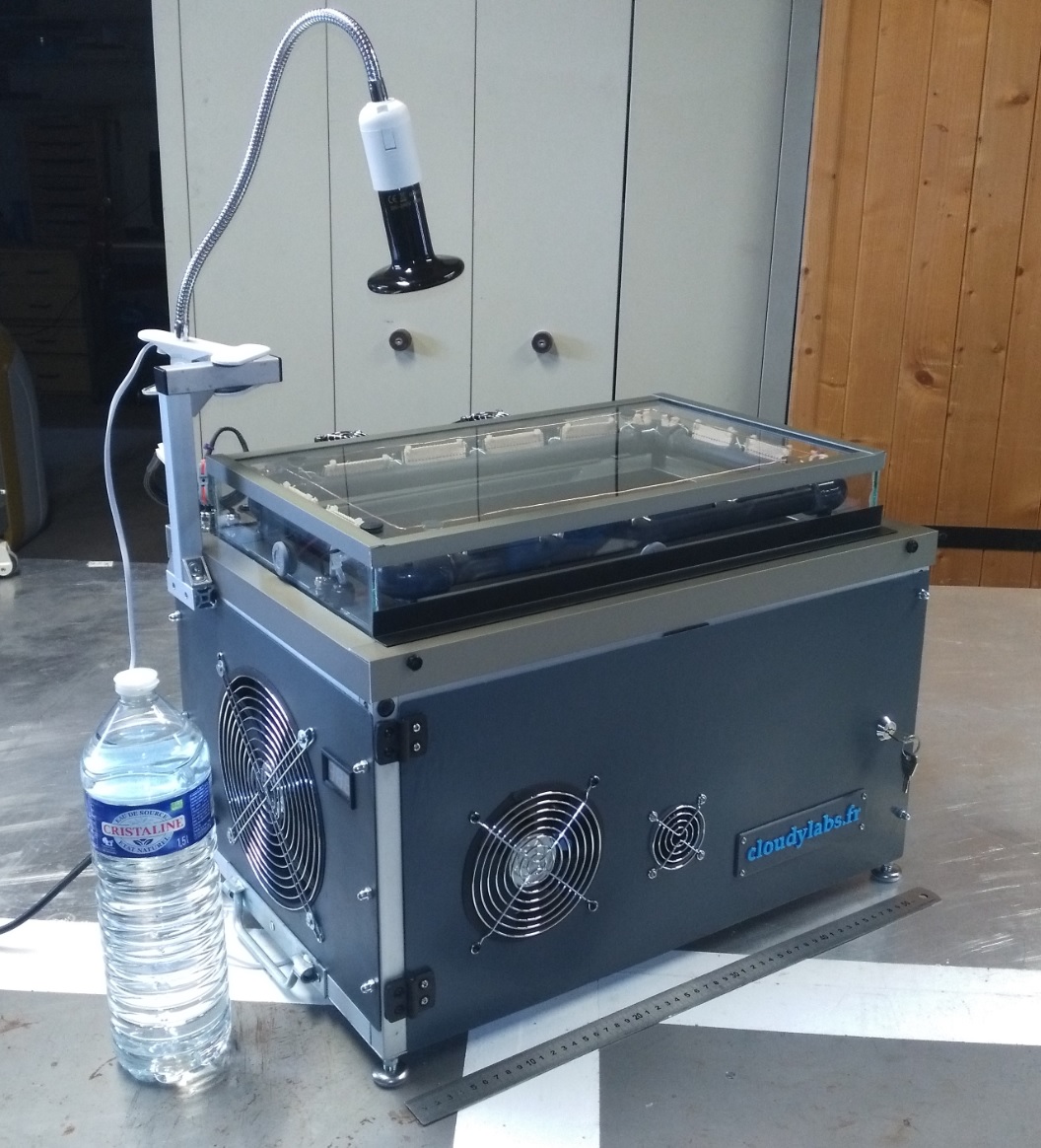
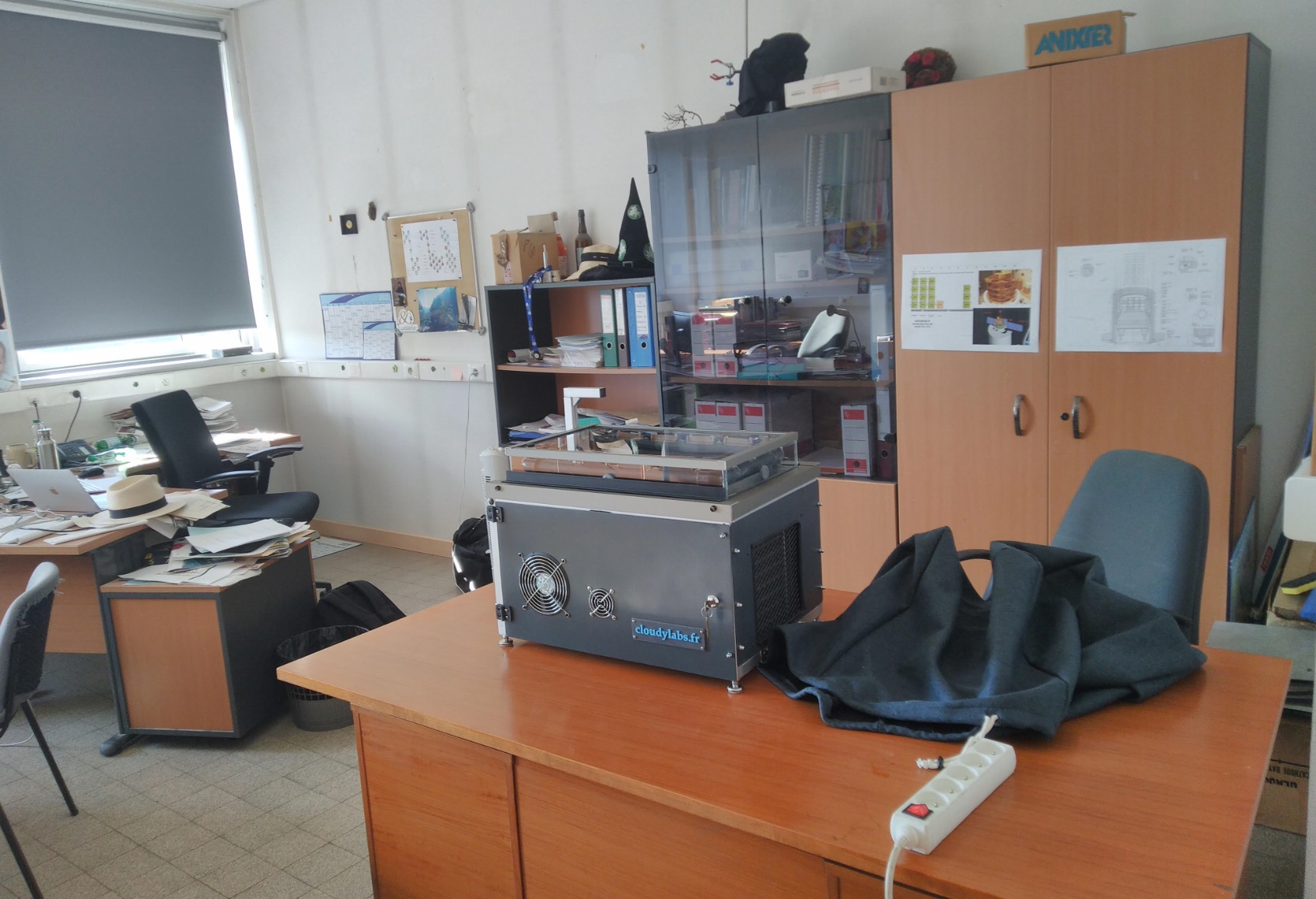
The machine still works 2 years later :

Machine n°2 : IPHC 2023
I built another machine for an University in Strasbourg. I improved the internal design and made a lots of simplifications.
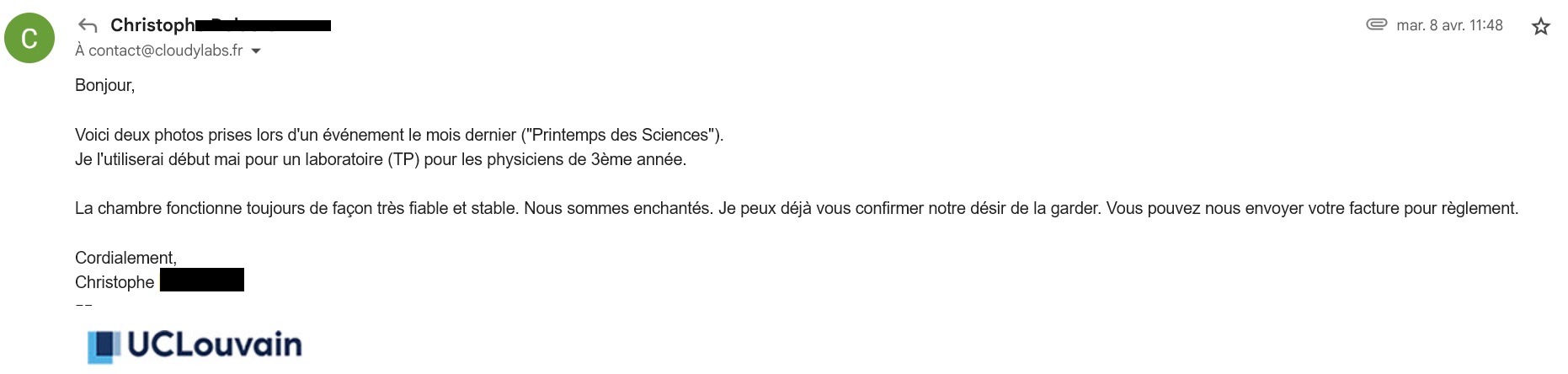
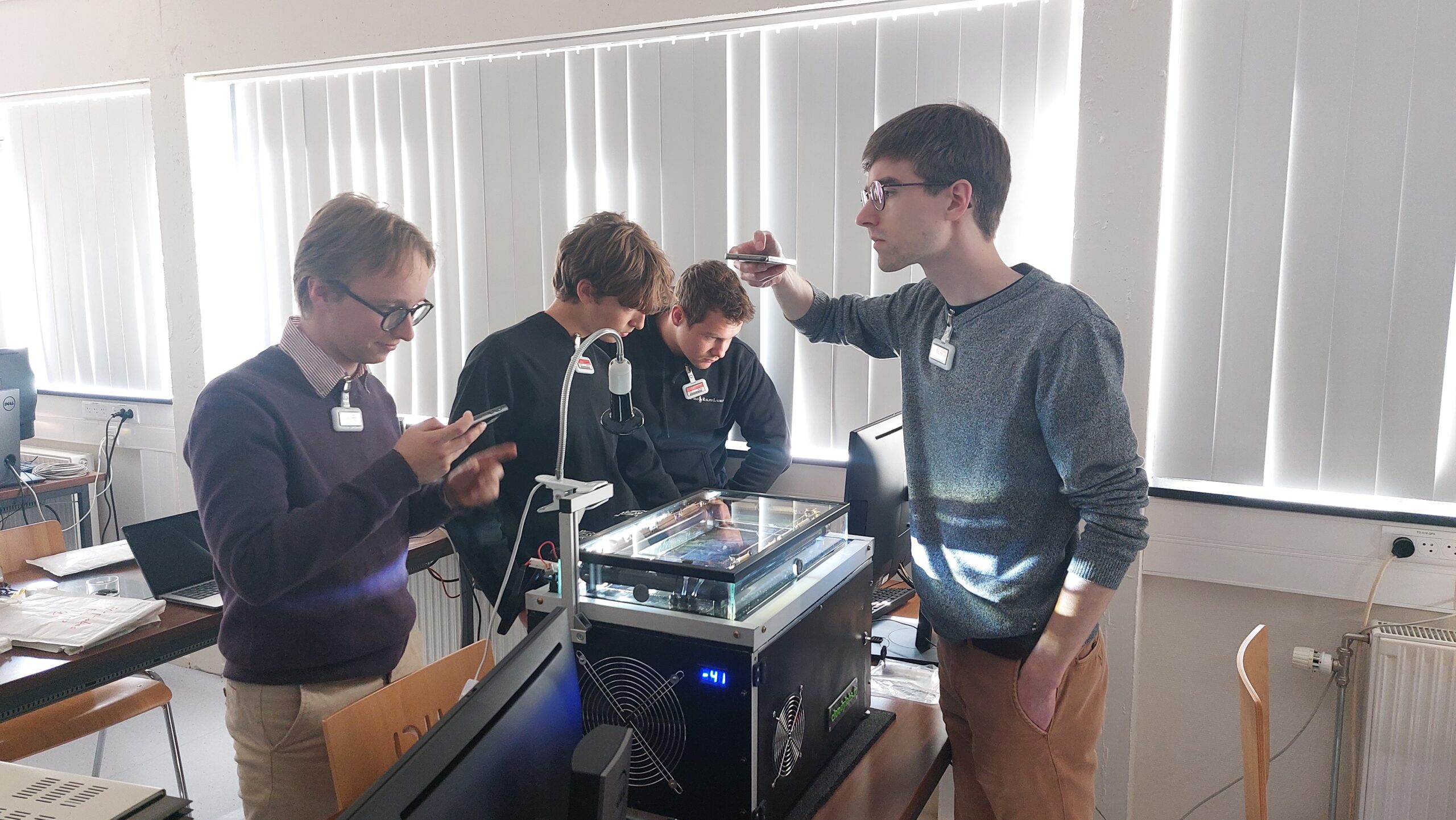
Machine n°3 : UCLouvain 2025
The Institut de Recherche en Mathématique et Physique de Louvain en Belgique desired a machine, but this was new for me as I had to ship it.
I put the chamber on a wood pallet with a sturdy carboard reinforced. Unfortunately the courrier put a heavy package on the box which completely broke the glass chamber, making some damages to the active surface. I sent a whole new glass chamber into an unbreakable wood box, and again, it arrived destroyed on a side. I sent another shipment with the new side to the University, then they glued it with standard silicone to build the glass chamber. Then, they changed perfectly the active surface thanks to a video and the machine worked as usual. So, shipping glass chamber in long distance is almost impossible. The best way is to glue it from separate parts.
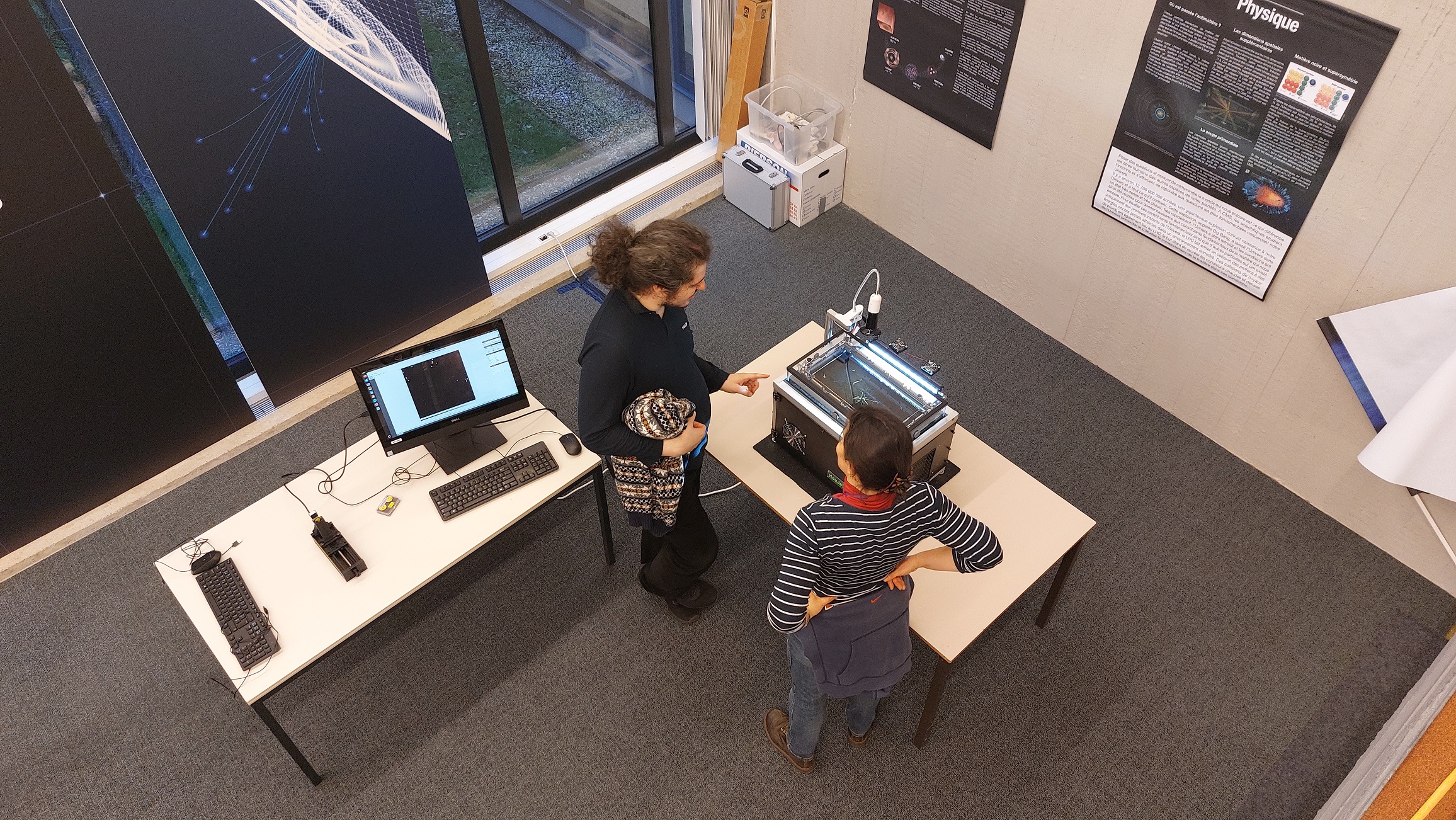
The university was very patient and skillful to repair the glass chamber.
Machine n°4 : Switzerland 2025
After 3 years of patience, Mr. Steve went personally from Suisse to get his cloud chamber. He built a dry ice cloud chamber but he wanted something more easy to run, as the supply and storage of dry ice is problematic. He is involved in numerous science club of Geneva to teach the radioactive world to youngs and is passionated about solar flares. He think that during solar flares these events can be seen in the cloud chamber. This is possible as protons or gammas in the GeV range can be emitted by the sun during CME (Coronal Mass Ejection) but I guess you need a good luck to be not far from the shower of particles. I hope to receive some interaction pictures of them, including some muons where the flux is dependent of the time of observation, as he said wisely.
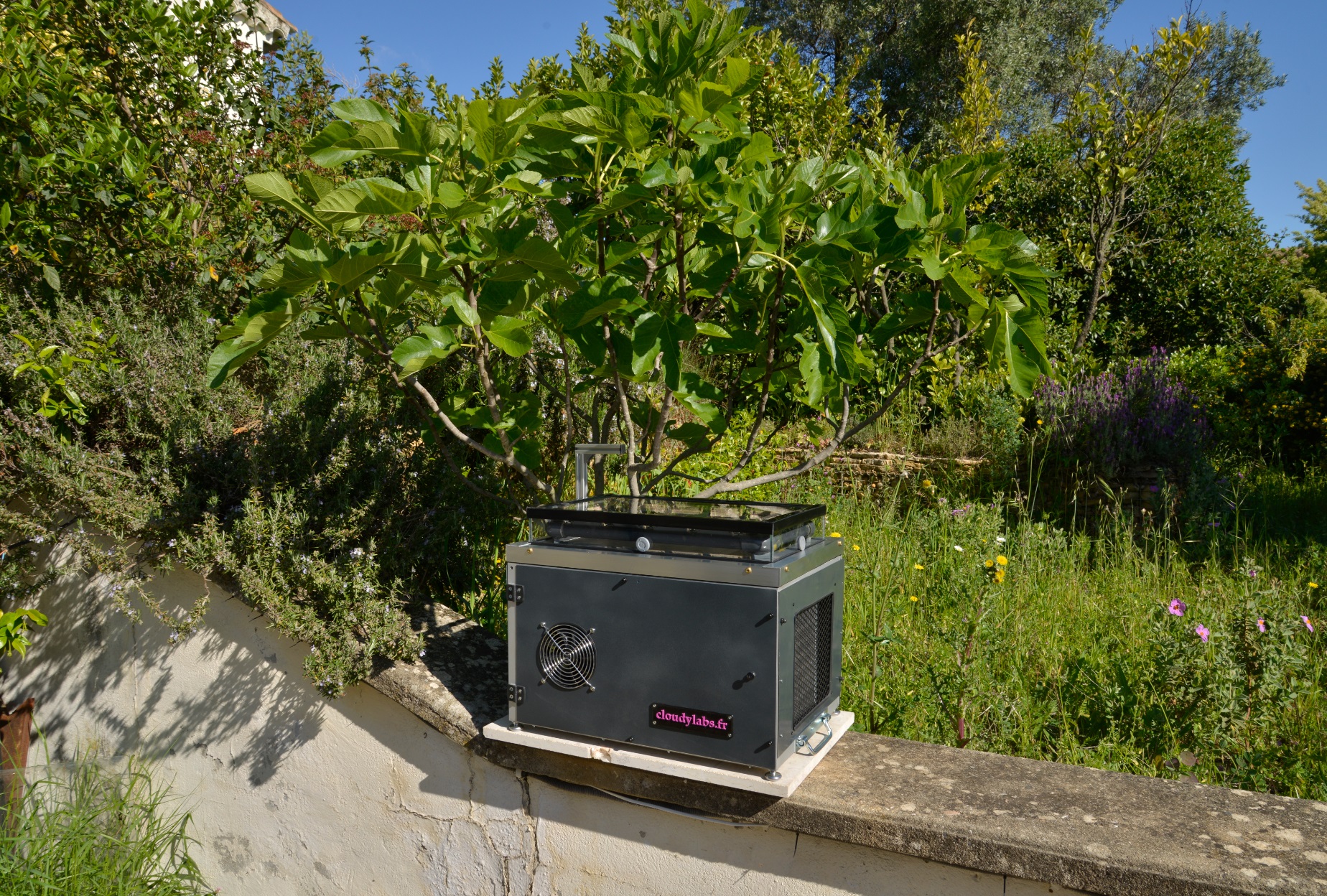
Despite the high winds outside, the machine work perfectly
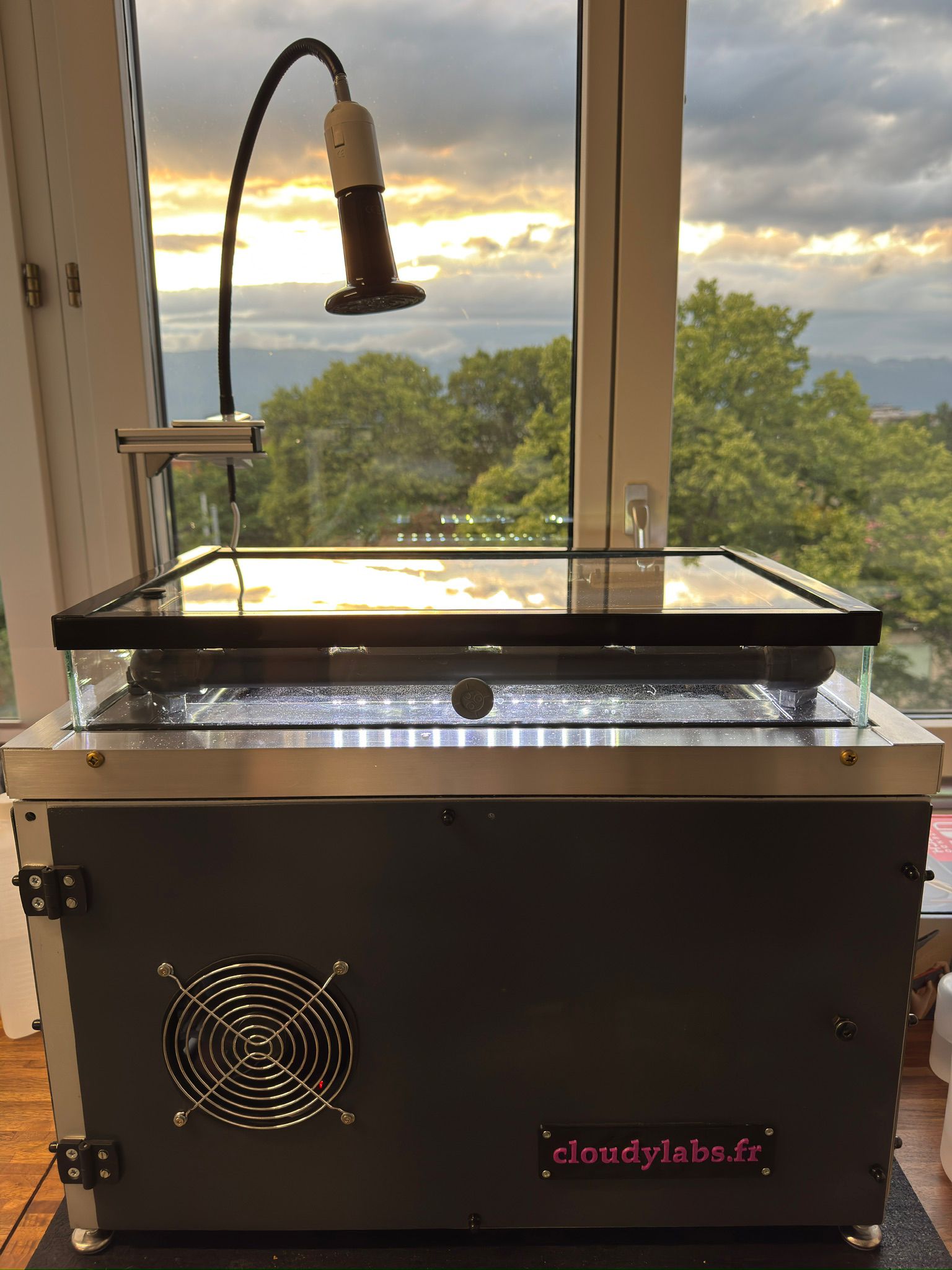
The machine is now in Geneva, looking for cosmic radiation.
Machine n°5 : Observatoire de Paris 2026
End 2025, an astronomer de l’observatoire de Paris contacted me to acquire a machine for his students. She had to do a conference in the Observatoire de Haute Provence in summer 2026 near I live, so she stopped with her teams in my workshop. She could see what it look like in reality and not only from videos. She was convinced of the quality so I went to Paris in September 2026 to deliver the machine n°5.
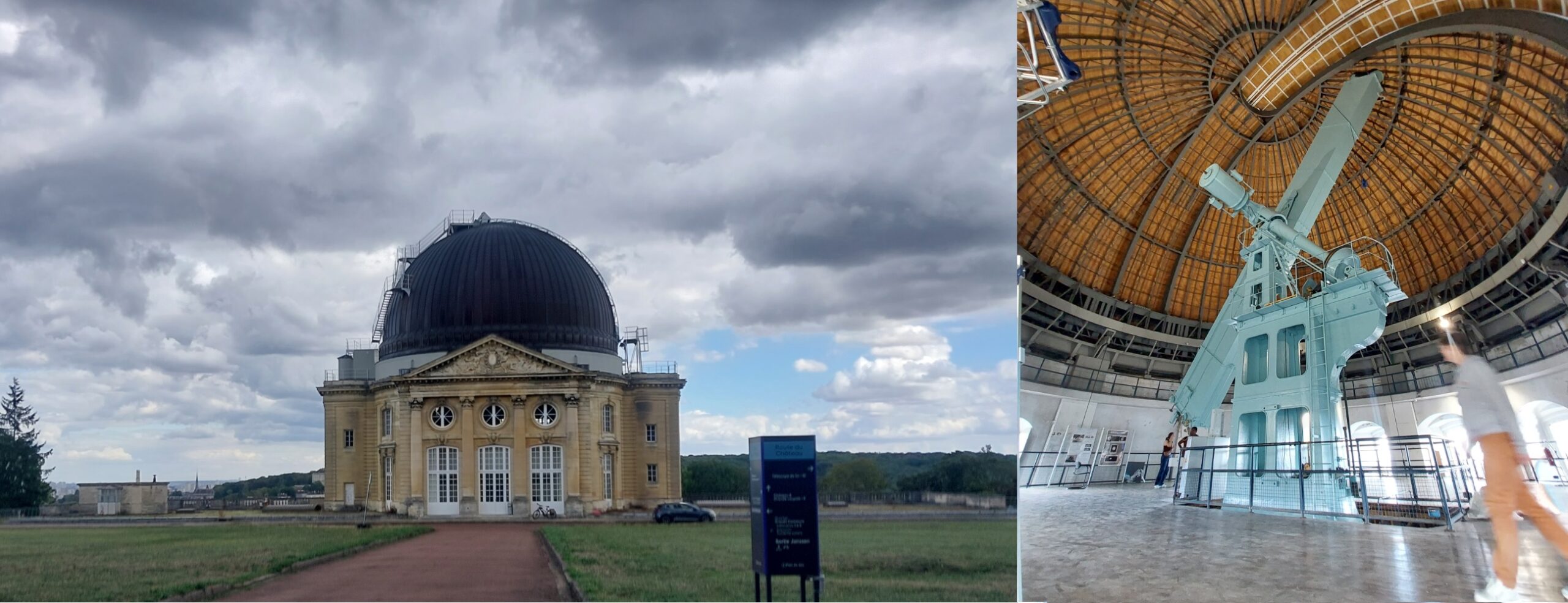
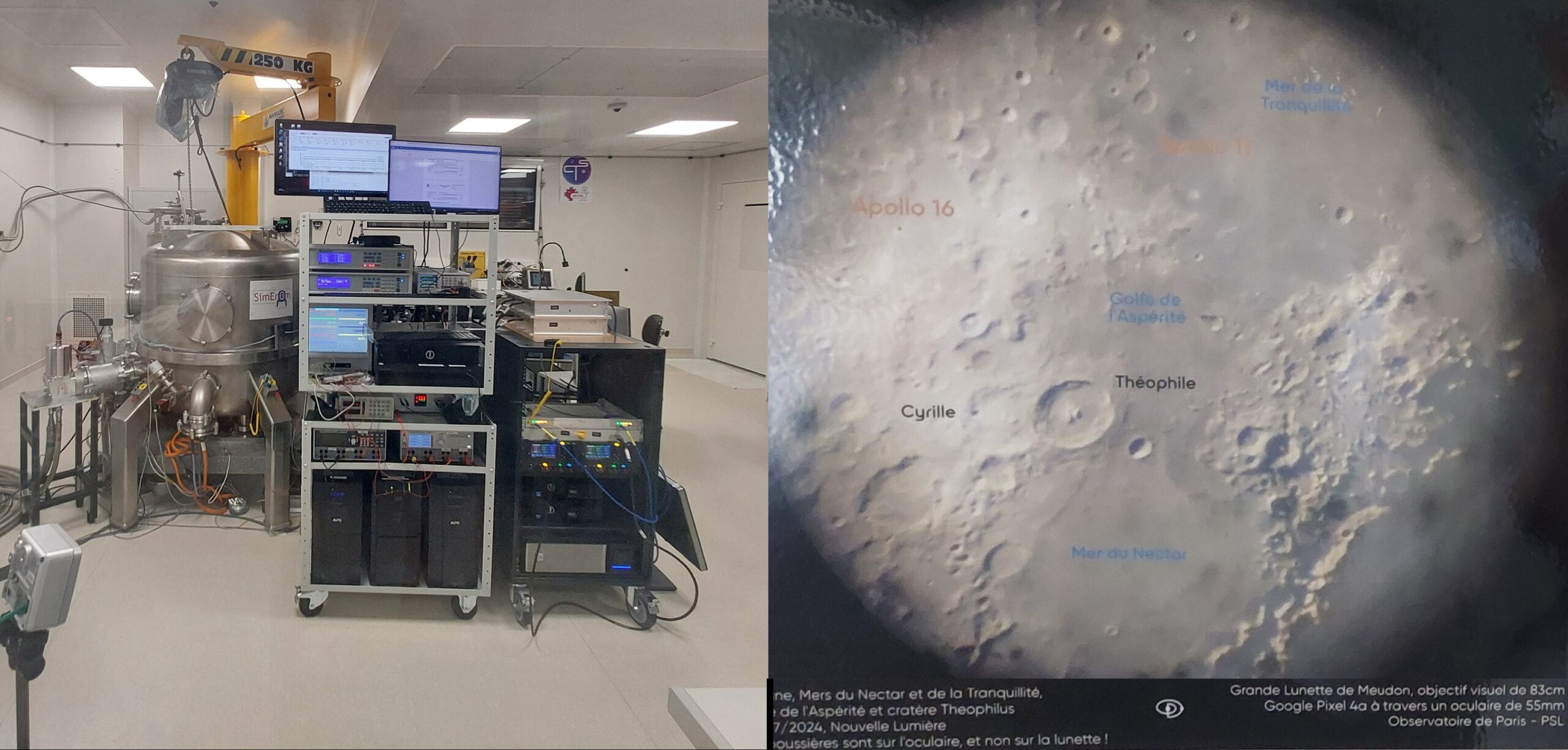
I visited some laboratory in Meudon, in one of them they are performing measure of gas evaporation on material before sending them to space. To summary, every material (metal, electronics..) have dissolved gas in it (water for example) or emit COV. Inside a satellite moving in space, the distribution of temperature is not uniform, the coldest region is where the detector are (there are cooled). And the gas emitted by the material in the vaccum will condense on the coldest par of the satellite, corrupting the detector thus the data obtained. So it’s necessary to measure and prevent the degassing of any part send in space. At right, what it really look like in the lunette of 1893 with a diameter of 830 mm : the picture of the moon is taken with a smartphone and the PSL is rebuilding the lunette to make it usable by the public soon !
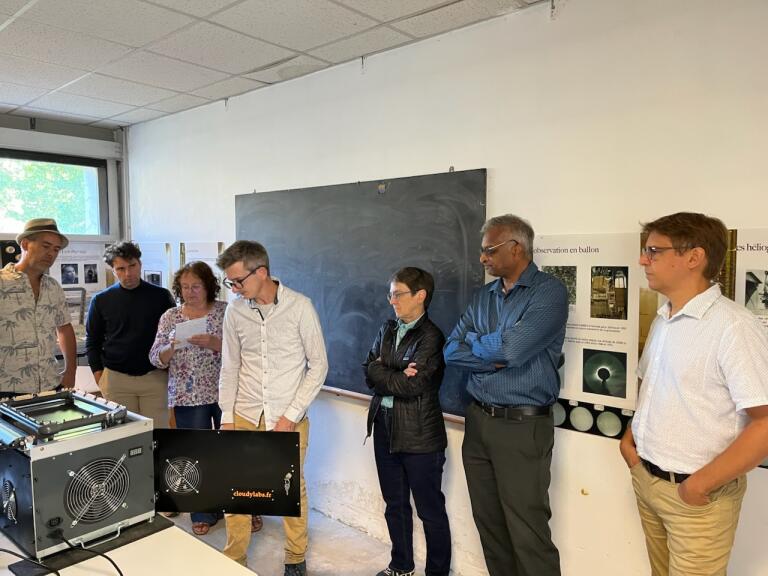
Explaining the working principle of the cloud chamber in Meudon
Machine n°6 : Sorbonne Université 2026
During the visit with the astonomer in June, un maitre de conférence de la Sorbonne was here and wanted the same machine for its educative programs. The 6th machine was partially working during the démonstration but I rushed to finish it for September to deliver it in time.
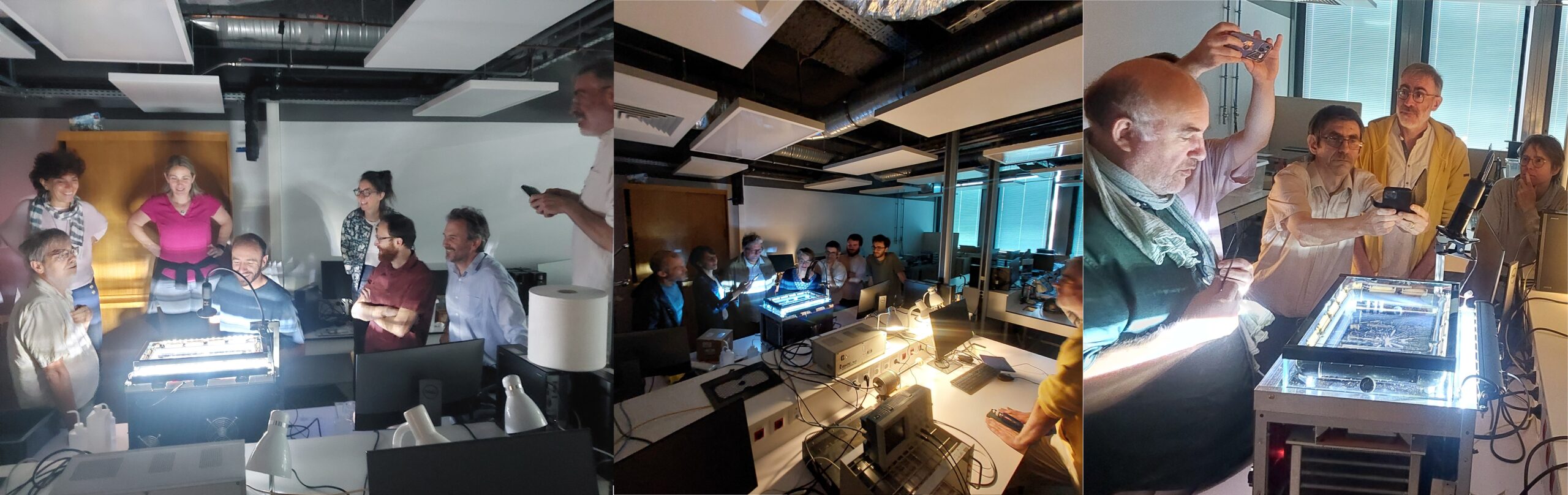
When I arrived, I started up the machine for a demonstration in front of few people, then turned it off to begin packing up the equipment. A short while later, a second group arrived, saying they had heard about a demonstration. I restarted the machine—even though it hadn’t been planned—because they were disappointed to have missed it. We ended up stopping and restarting it three times throughout the day to show it to about twenty people. They were so enthusiastic about the signal quality and came up with theories based on what they were seeing. I really enjoyed those fascinating exchanges. In those moments, it felt like everyone had reverted to childhood, marveling at what they were observing. I was warmly welcoming at Meudon and la Sorbonne and will keep great memory of this passage there.
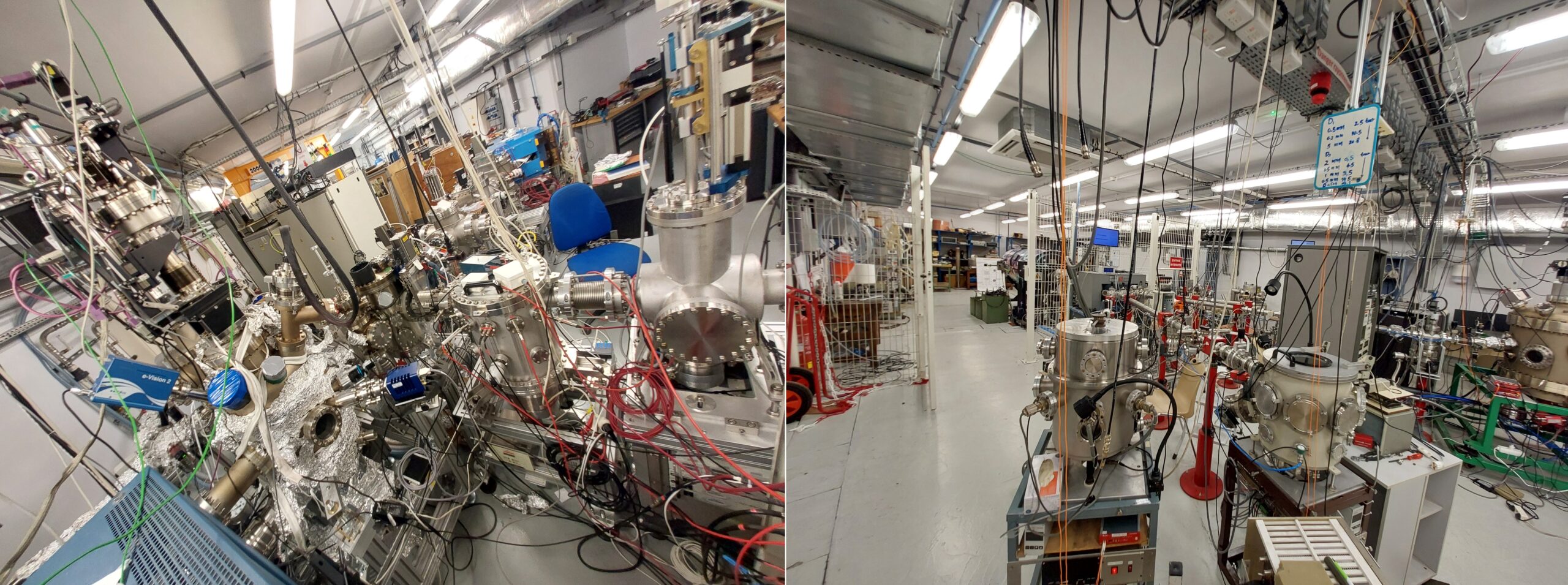
They showed me a part of their research on accelerating ions to discover which ions are the best to treat cancer tumors. They can strip electrons from noble gases to a high degree, like Ar16+, accelerate them, and collide them to estimate electron capture probabilities after collision. The aluminum foil around the big vessel is to reduce thermal loss—that’s the easy thing to understand ! Maybe one day they can send some accelerated ions in the cloud chamber… but an Argon ion of 1 MeV has only a range of 1,7 mm in air, so we won’t see something. Maybe a lightweight ion like Li or He ? only 5 mm. With protons, at 1 MeV they travel about 2,5 cm… we need more energy ! so the best source is still the natural background where proton have high energy (10-50MeV) at sea level.
If you come to Paris, go absolutely to their mineral museum in Jussieu La Sorbonne, this is really astonishing. There is some colors that even the eye don’t know how to interpret it.